
How Useful Is AI on the Set of a TV Show?
Are the AI storytelling demos for real, or just vapid hype?

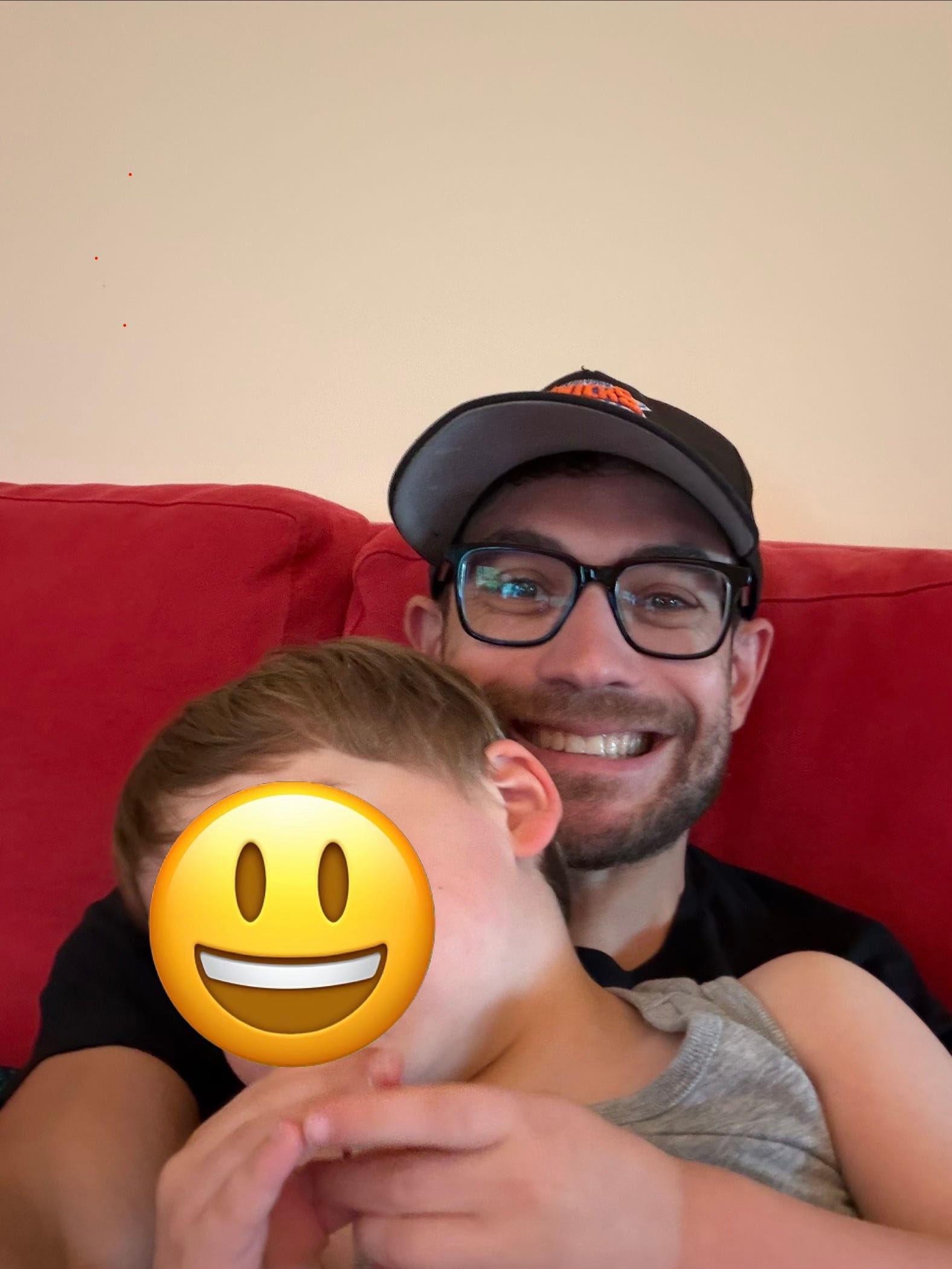
Greetings from Brooklyn, where it’s 95 degrees, the outdoor bars are filled with parents day-drinking while on Zoom calls, and I have successfully turned my three-year-old son Max into a New York Knicks fan. Here’s us watching the Knicks pummel the Sixers by 40 to reach the Eastern Conference Finals. Life is good.
On Friday, we had our latest content strategy mastermind session for paid Storytelling Edge subscribers, and it was a blast. We tackled challenges like:
What do you do when the exec team wants you to report on your AI Search performance, but most of the prompt tracking tools are total BS?
How can you cut down on the time you spend editing the freelancers on your team? And should AI play a role?
How do you nail the interview for a content role in an industry you’ve never worked in?
How do you bring together all of the shit your content team is doing with AI in one place so it’s integrated and organized?
You can join these small-group mastermind sessions when you upgrade your subscription. You’ll also get a personalized, signed copy of my best-selling new book, Super Skill: Why Storytelling Is the Superpower of the AI Age, and access to my new storytelling course. (And you’ll help me keep buying the $4 high-protein vanilla yogurt smoothies that are keeping my child alive!)
How useful is AI really?
For the past couple of months, I’ve been receiving strange texts at all hours of the night. Sometimes, it’s a video of my friend Brandon directing a giant alligator in a dance routine. Other times, my friends Brian and Shane are dressed in full bush camouflage, like they’re about to go undercover in a magical forest. In all these videos, my friend Sylvia has green hair and is styled like a newscaster in Munchkin Land. Another time, they were recreating Scrooge McDuck’s money vault.
I showed these to my three-year-old Max, who’s been demanding that my wife show him “the show with the dancing alligator!” She thinks we’re both going insane.
Whoa Joe, slow your roll on the micro-dosing, you may be thinking. But it’s not that this time! You see, my best friends have spent the past few months making a children’s TV show.
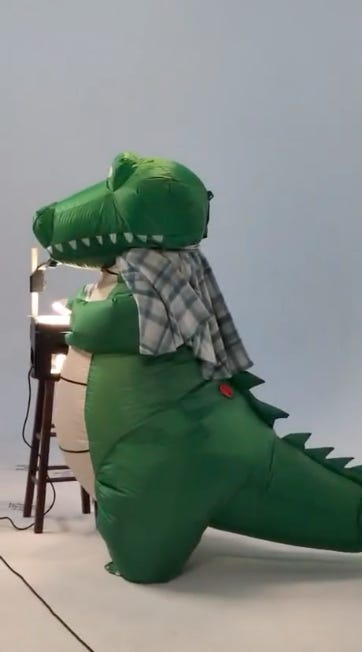
Several years ago, Shane Snow—my longtime friend and Art of the Zag co-host—made the rare pivot from SaaS founder to entertainment mogul, building a tech-enabled production company. Their latest program is an incredible kids’ show that teaches critical thinking and media literacy skills. (You’ll be hearing much more about it very soon!) It’s a hybrid of live action and animation—think Ted but without all the Boston alcoholism—which makes it the perfect candidate for AI disruption.
In theory.
In this week’s episode of The Art of the Zag, I pressed Shane for a first-hand update on the state of AI in TV production. After all, my social media feeds are flooded with examples of near-perfect AI animation. Shane’s team employs one of the smartest AI engineers I know. How had AI changed the way they worked?
While they hired a full team of animators, they were curious to see what AI could do. The team tested every AI tool and agentic workflow, and came away massively disappointed. “All attempts to use AI animation resulted in it not being good enough for TV,” he said. It also completely failed at Assembly edits.
Luckily, they still had a team of humans there to pick up the slack.
This phenomenon has a name: The Reality Gap. Right now, there’s a massive chasm between the demos of AI tools and their performance in complex environments, like the set of a TV show or within the complex maze of a corporation.
We’re living in a maze of distortion: AI influencers are incentivized to inflate the capabilities of AI tools because algorithms reward hype. Likewise, corporate leaders across industries are peacocking about the impact of their AI initiatives, even if the results aren’t real, because they’re secretly terrified they’ll get fired if they don’t. In a recent survey by Writer, 75% of executives admitted their AI strategy was just for show.
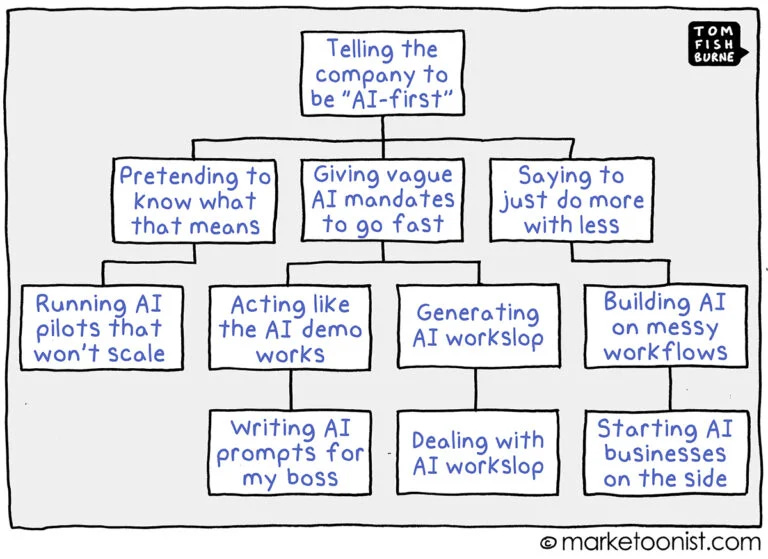
This is the AI Reality Gap.
On the show this week, Shane and I explored the state of this gap—where AI falls short, and the surprising, deeply unsexy places that it actually did help.
Then, we brought on one of my favorite people: AJ Thomas, CEO of Goodfire Ventures, a new VC firm operating at the intersection of technology and creativity. AJ has a fascinating story: She grew up flying to school in her grandpa’s two-seater plane in rural Kuwait, moved to America, lived in a Honda Civic while selling cell phones, and hustled her way to becoming the Global Head of Talent at Google X, Google’s storied moonshot factory. We got her perspective from the frontlines of AI and entertainment investment in Silicon Valley to better understand where things are headed next.
If you’re a creative wondering how AI will transform your work, this week’s episode is a must-listen.
LISTEN ON APPLE (SUBSTACK EMBED IS BROKEN)
Want to get top storytelling insights and strategies in your inbox each week? Then subscribe to this newsletter and check out my best-selling new book, Super Skill: Why Storytelling Is the Superpower of the AI Age.

Interesting podcast on the AI reality gap - love the dancing alligator!